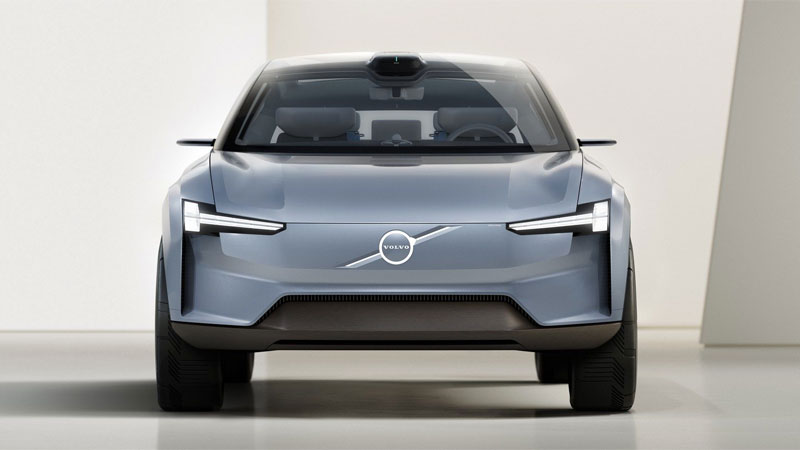
Category: Concept Vehicles

A Glimpse at the 2011 Honda Odyssey

Catalin Matei, Senior Designer, Honda R&D Americas, Inc., describes the design of the 2011 Honda Odyssey Concept at the Chicago Auto Show.

When is a concept not really a concept? That depends on how you define the term.

If you mean concept, as in a motor vehicle that might some day go into production, then you’re talking about the traditional sense of the definition. But in Honda’s case the Honda Odyssey Concept–on display at the Chicago Auto Show–is something very close to the actual model that will go on sale this fall. Honda is using the concept label because they’re gauging everyone’s reaction to the next generation Odyssey and will make minor changes before the minivan goes into production.

In the Feb. 10, 2010 issue of  “USA Today, ” Chris Woodyard noted that the concept Odyssey is “…shorter than your standard family box, and has a sleek lightning bolt line along the side that makes the back windows slightly lower than the middle windows.”

Dynamic Styling

The Odyssey Concept is significantly removed from the traditional minivan styling with its low and wide posture, highlighted by what Honda calls a “lightning-bolt” beltline to further set apart the minivan’s profile. Compared to the current Odyssey, the Concept’s somewhat lower roofline (-1. inch) and wider stance ( 1.4 inch) gives rise to a sleeker, forceful and more dynamic presence with enhanced aerodynamics that help increase fuel mileage. Future enhancements to the actual production Odyssey’s cabin are meant to further expand the already accommodating room for occupants and cargo found in the current model.

“The Odyssey established its reputation by providing families with what they most want in a minivan – great functionality, an emphasis on safety and good fuel economy,” said Vicki Poponi, assistant vice president of American Honda product planning. “Odyssey then further delighted customers with its surprisingly engaging, fun-to-drive and dynamic nature. The next-generation Odyssey promises to take these strengths to a higher level while adding more style and personality.”

Sporty Presence

The steeply raked front and rear roof pillars, exclusive side-glass profile, bevled roof line, and tapered rear cabin appearance blend to generate a powerful and eye-catching look and feel from any angle. The lightning-bolt beltline dives toward the back of the van emphasizing the newest Odyssey’s stylish look and feel while boosting outward visibility for third-row occupants. Impressive body-to-wheel dimensions lessenthe perception of vertical height typical to most minivan models. Fender flares further highlight the vehicle’s strongly rooted and elegant identity. The concept vehicle’s projector beam head lamps, LED taillights and form-fit fog lights further increase the advanced quality of the design and style.

Improved aerodynamics and sophisticated powertrain engineering will certainly benefit the next-generation Odyssey’s improved fuel economy. The next generation Odyssey is likely to attain an EPA-estimated gas mileage rating of 19 city/28 highway mpg on select models as estimated by Honda.

American Designed

The Honda Odyssey is produced exclusively in Alabama by Honda Manufacturing of Alabama (using both domestic and globally sourced parts). Honda’s American design teams located in California and Ohio are spearheading development of the fourth generation Odyssey, now the best-selling minivan nameplate in the United States.

Source: American Honda Motor Co., Inc.

Toyota Hybrid Concept Electrifies NAIAS

Toyota FT-CH Hybrid Concept

When it comes to hybrid vehicles, Toyota easily leads the industry. The Toyota Prius is a runaway bestseller, while Lexus offers the only compact premium hybrid model on the market.

Toyota isn’t planning on stopping there, however. The Japanese automaker is looking at bringing out several new models over the next five years including plug-in hybrid, battery electric vehicles, and quite possibly the first production ready hydrogen fuel cell vehicle in 2015.

Toyota FT-CH Concept

On Monday at the North American International Auto Show (NAIAS) in Detroit, Toyota introduced a concept which appears to offer a strong hint at where the automaker is heading. Designed and styled in Europe, the FT-CH is 22 inches shorter than the current Prius model, but within a hair breadth of its width. This is important because although the trend is toward smaller vehicles, encroaching on cabin space changes the pictures. With the FT-CH, Toyota can still offer adequate room while reducing overall weight and increasing fuel efficiency.

“Within the next 10 to 20 years, we will not only reach peak oil we will enter a period where demand for all liquid fuels will exceed supply,” said Jim Lentz, TMS president. “A century after the invention of the automobile, we must re-invent it with powertrains that significantly reduce or eliminate the use of conventional petroleum fuels. One of many alternatives is through what is commonly called the electrification of the automobile. By far, the single most successful example of this has been the gas-electric hybrid.”

New Technologies Emerging

Clearly, Toyota has no intention of completing abandoning gas-electric hybrids. Indeed, the FT-CH or something like it will feature a lithium-ion battery pack instead of the current nickel-cadmium battery pack found in today’s Prius, Ford Fusion Hybrid, and other models. The FT-CH might also operate as a pure electric vehicle or Toyota could use the platform for hydrogen technology.

In any case, the FT-CH as the pictures demonstrate, offer some hints at where Toyota is going with its designs. Take note of the dash and the see through seats: these features are not currently found in any Toyota model!

Toyota FT-CH
Toyota FT-CH
Toyota FT-CH
Toyota FT-CH

Source: Toyota Motor Sales (TMS) U.S.A., Inc.

GMC Granite: Urban Utility Vehicle

Concept GMC Granite: Urban Utility Vehicle

One of my chief complaints about GM’s restructuring is that the automaker got rid of Pontiac in favor of keeping GMC. Not that I have anything against GMC, but when Pontiac sells more cars than Buick and GMC, and the latter only offers Chevrolet Trucks at a higher trim level, then my perplexity is raised accordingly. Did GM get rid of the wrong brand? Couldn’t they have found a way to keep Pontiac along with Buick and GMC?

Well, what is done is done: GM is now marketing four brands as it unwinds or kills off four others. Cadillac, Buick, GMC, and Chevrolet are in, while Saturn, Saab, Hummer, and Pontiac are out or soon will be.

GMC Granite Concept

But there is a concept vehicle making the rounds of the auto show circuit beginning with the 2010 North American International Auto Show (NAIAS) in Detroit, giving enthusiasts a hint of where GMC is headed as expressed in the compact Granite.

This vehicle, which appears ready to compete against various Scion models, the Nissan Cube, Kia Soul, and other urban utility vehicles offers a surprising, but refreshing change for the brand.

The Granite is boxy, invigorating, and unexpected, a model designed to help give GMC new meaning, by taking the brand in an important new direction. Two feet shorter than any GMC now on the market, the Granite won’t be mistaken for any other GM vehicle. And, if GM resists offering a similar version to Chevrolet, the Granite may be the start of something uniquely GMC.

Let’s hope so. Consumers have had enough of badge engineering.

“Granite was conceived as a new type of vehicle from GMC – one that could stretch people’s ideas of what a GMC can be,” said Lisa Hutchinson, product marketing director for GMC. “We call it an ‘urban utility vehicle’ and our goal was redefining what the GMC name could mean to a new generation of customers looking for both bold design and functionality.”

Easy to Maneuver

Sitting on a 103.6” wheelbase, which is about the size of the current Chevrolet Cobalt, the Granite is actually a foot shorter than the Chevy, allowing the car to maneuver with ease. Four doors which swing open French style make it entering and exiting easy, thanks also to no center pillar getting in the way.

20 inch wheels with Bridgestone tires, a sporty stance, and incorporating chiseled features found in vehicles of this class, help distinguish the Granite. The concept features the same 1.4L I4 engine planned for the Chevy Cruze and is paired with a six speed automatic transmission.

I can see a manny tranny option being especially important for this vehicle.

Will GM build the Granite? Perhaps. Give the car a chance to be shown at shows in Detroit, Chicago, and New York first, but if customer reaction is positive, expect GM to fast track the Granite into production.

GMC Granite
GMC Granite
GMC Granite
GMC Granite

Source: GM Corp.