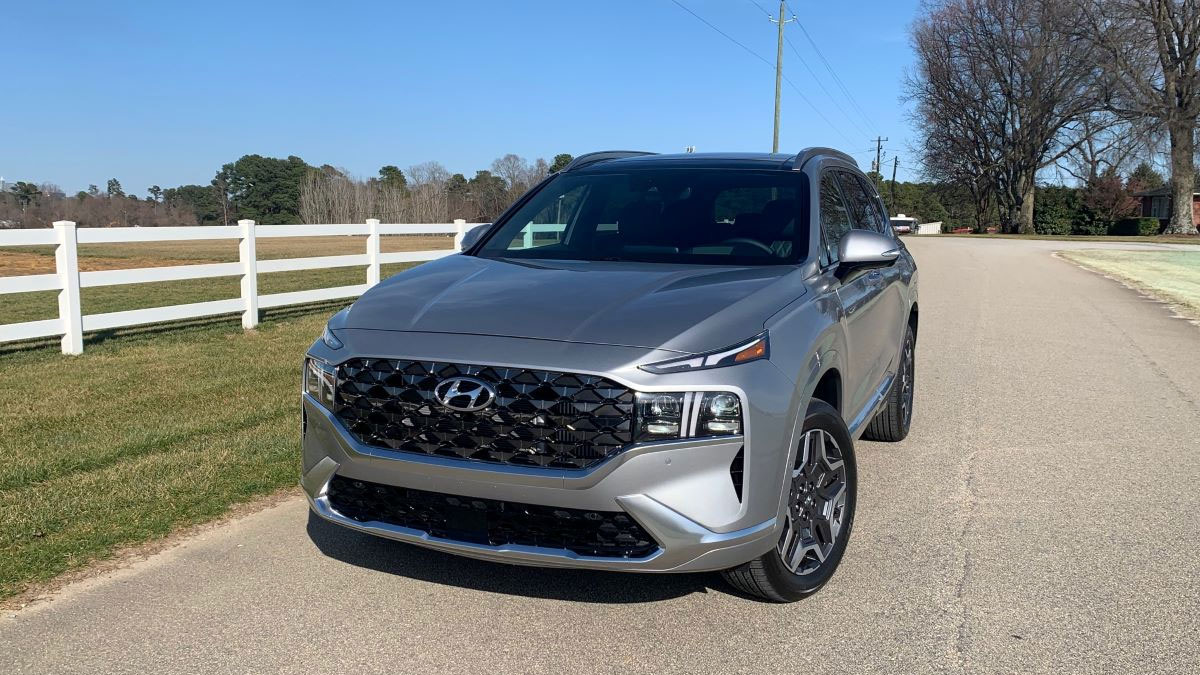
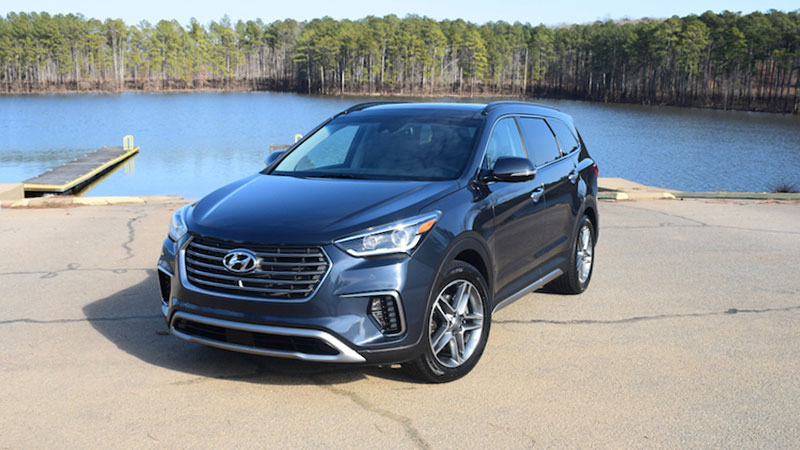
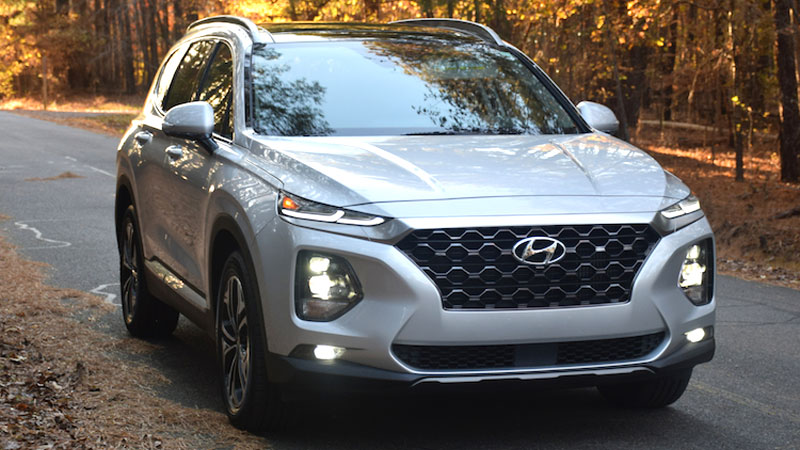
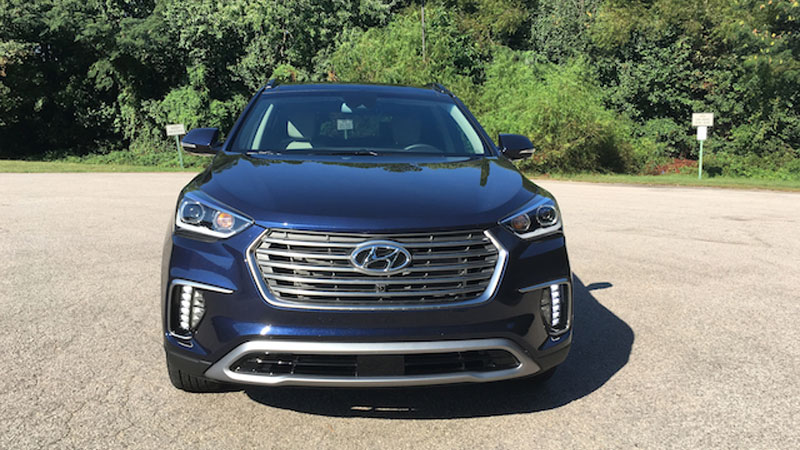
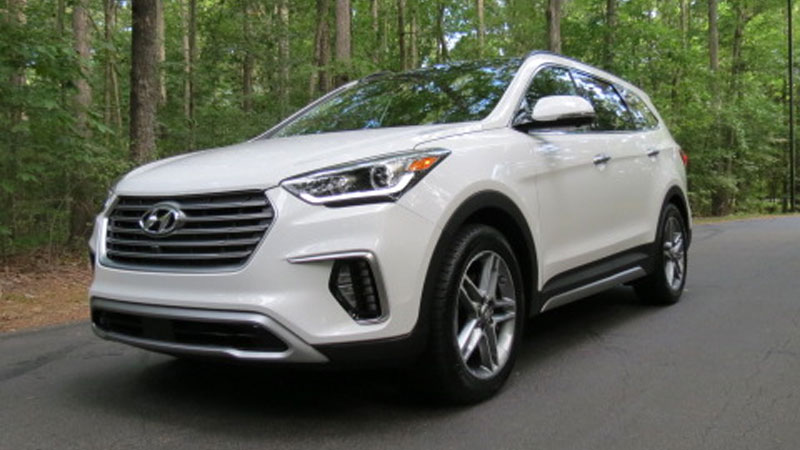
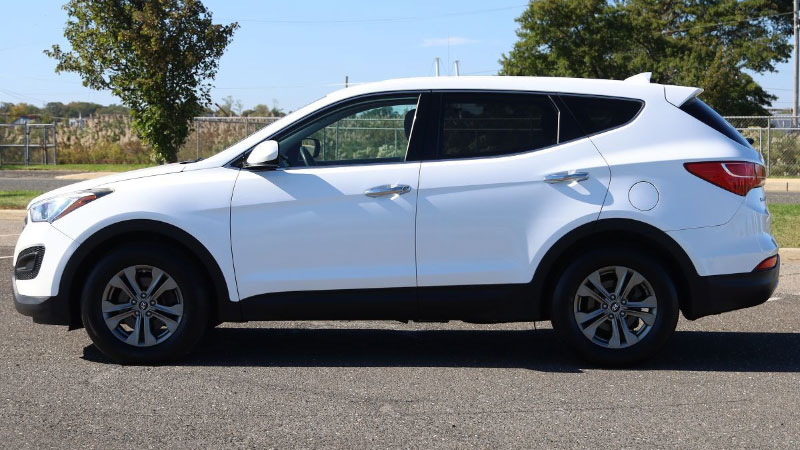
Midsize sport utility vehicles are a dime a dozen. Or at least it seems that way. Mostly ever car manufacturer offers at least one model, a segment featuring SUVs with two or three rows, typically seating 5 to 7 passengers.
The Santa Fe is also part of the sub-segment of vehicles known as crossovers. These SUVs ride on a car chassis, in this case the one underpinning the Hyundai Sonata, instead of a truck chassis as traditional SUVs do. With crossovers you can get optional all wheel drive capabilities, but as far as off-road work light duty is as far you would dare to go with these models.
Late Arrival
For 2010, Hyundai gave the Santa Fe a mid-cycle refresh, a late one at that. The 2010 model was introduced in January, months later than when new models are usually introduced. Thus, EPA gas mileage figures have only been posted for the base trim package.
The first generation model was introduced in 2000 for the 2001 model year, with the second generation Santa Fe rolling out six years later. Now midway through its lifespan, the Santa Fe enjoys several important tweaks including the following:
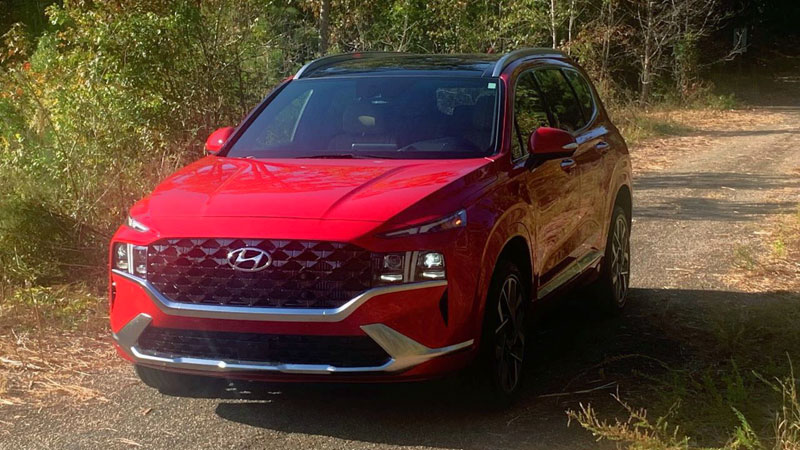
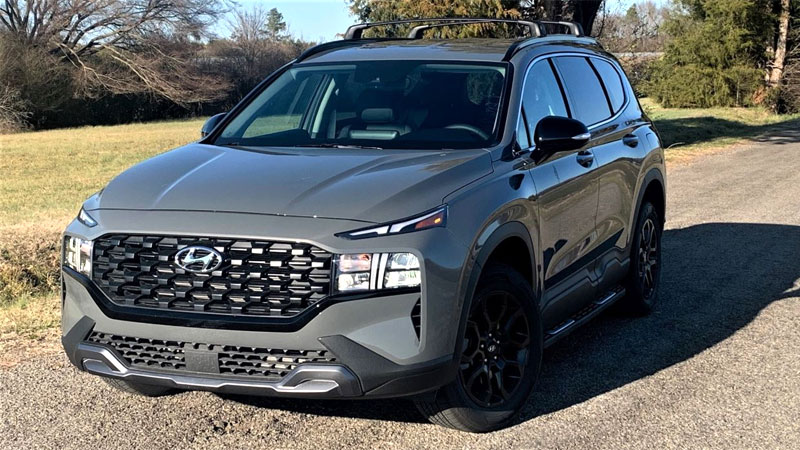
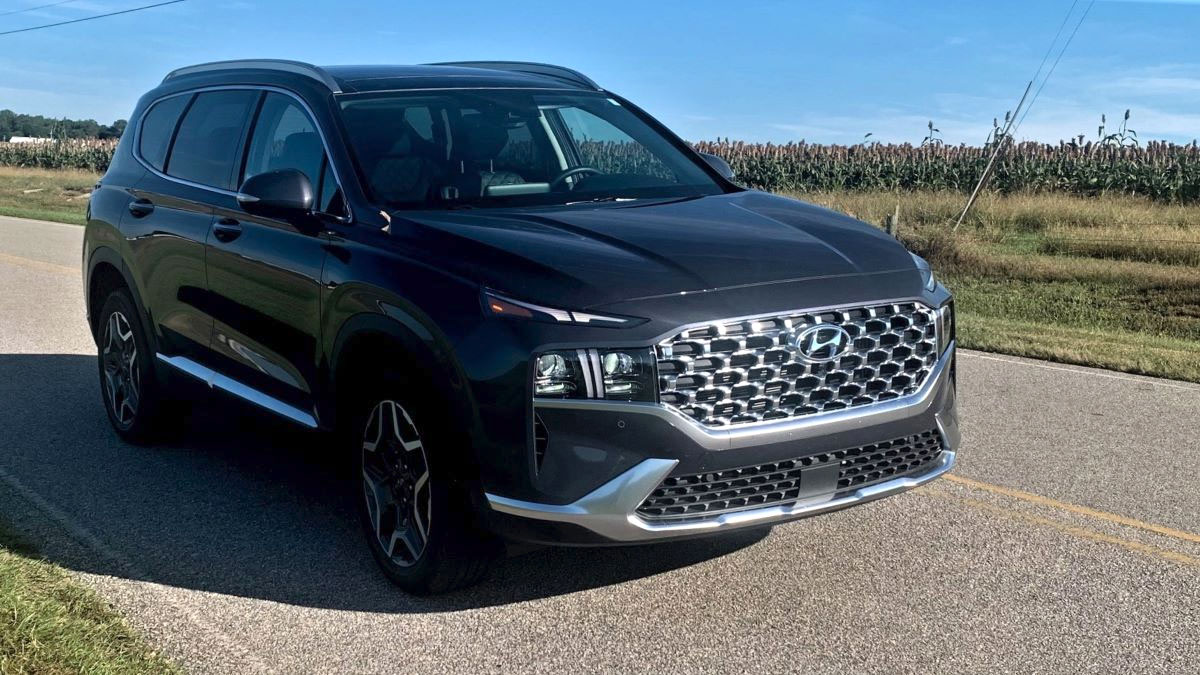
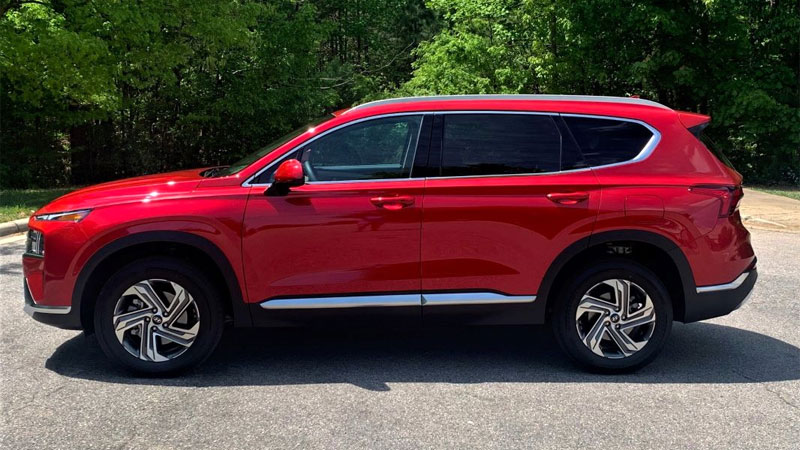
- Exterior updates including changes to the grille, fog lights, bumper, and body trim. New wheels are evident, available in 17- or 18-inch sizes.
- On the inside, the third row option is no longer available, which will put the Santa Fe at a disadvantage to similar vehicles including the Toyota Highlander. Third row passenger space was limited anyway as the Santa Fe is smaller than its competing models.
- Where the Santa Fe lacks in passenger seating, it gains in entertainment as the Hyundai now includes a number of important features such as audio controls on the steering wheel, Bluetooth connectivity, and a USB iPod interface. Seats have been upgraded and if you choose higher trim level packages, a power driver’s seat is available as are heated seats.
- Under the hood, the Santa Fe has two new engine choices. A more efficient 2.4L I4 engine is now standard while a 3.5L V6 is optional. The base engine with standard trim is paired with a six-speed manual transmission while all other trim and engine packages include a six-speed automatic transmission.
According to the EPA, the base engine with manual transmission returns 19 mpg city, 26 highway. Fuel economy figures for other trim levels should be released within the next week or two.
Safety Upgrades
Last but not least are a number of safety upgrades including active head restraints for the front seats, antilock brakes and traction control, and rollover sensors which work to deploy the side impact airbags when needed.


Source: Hyundai Motor America

The Hyundai Genesis received Consumer Reports "top pick" award for an upscale sedan, quite a feat for an all new model.
My thoughts that the Hyundai Genesis should have been given its own brand name (ala Lexus) hasn’t hurt the Korean luxury sedan. Over the past several months, the Genesis has been recognized as one of the top cars produced today and is a finalist for next week’s North American Car of the Year award (I predict that they will win).
One of the most critical consumer sites in the world is Consumer Reports, the magazine owned by Consumers Union, an independent consumer product testing and watchdog group based in New York. Consumer Reports (CR) rarely offers praise for all new models, but in the case of the Hyundai Genesis the magazine has gone out of its way to name the Genesis its top-rated ‘upscale sedan’ beating twelve competitors including the Lexus ES 350.
The Genesis isn’t the only Hyundai model recognized by CR for its superior build quality, as the magazine also has named the Elantra and Santa Fe as “top picks” in their small car and sport/utility segments as well.
“The Hyundai Genesis rivals high-end luxury sedans but costs considerably less,” said David Champion, senior director of Consumer Reports’ Auto Test Center in East Haddam, Connecticut. “Its luxurious and spacious interior and quietness far transcend its relatively modest price.”
The Genesis was put to the test against four other new or redesigned upscale sedans for the February issue of Consumer Reports, those other cars were the Acura TL, Nissan Maxima, Pontiac G8 and Lincoln MKS. The TL and Maxima were rated as excellent while the G8 and MKS were recognized as very good models.
Specifically, CR had this to say about the Hyundai Genesis:
Spacious and well appointed, the rear-wheel-drive Genesis offers good value and is a compelling alternative to luxury vehicles costing thousands more. This car’s forte is swaddling passengers in silence. The engine sounds polished and road noise is strikingly absent. The interior rivals those of the very best luxury cars, with its optional stitched-leather dashboard facing and consistently high-quality materials. The only real drawback is its ride, which can be unsettled at times and doesn’t live up to the standards set by other luxury cars. The Genesis 3.8 ($36,000 Manufacturer’s Suggested Retail Price as tested) is powered by a 290-hp, 3.8-liter V6 that feels quick and smooth and delivers a decent 21 mpg in CR’s own fuel-economy tests. The six-speed automatic transmission provides smooth, quick shifts. Braking is excellent.
Clearly, Hyundai is doing something right when three of its models are considered “top picks” by one of the most challenging judging panels in the world. The Hyundai Genesis is probably the best valued luxury sedan on the market, a car that will likely raise the automaker’s visibility in the years ahead.
Source: Consumer Reports